

Tankless vs tank reverse osmosis systems: which should you choose?
Choosing a reverse osmosis system involves more than comparing filtration stages. How the system delivers water, how much space it needs and what it costs to maintain all affect everyday use.
One of the main decisions is whether to choose a tankless reverse osmosis system or a system with a storage tank.
Both use reverse osmosis technology. The key difference is that a tank system stores treated water for later use, while a tankless system produces it as you turn on the tap. Tankless designs typically require less installation space because there is no separate storage tank.
How does reverse osmosis work?
Reverse osmosis, or RO, uses pressure to push water through a semi-permeable membrane. The process separates the incoming water into two streams: treated water and a concentrate stream carrying rejected substances to the drain.
An RO system typically combines the membrane with additional treatment stages, such as sediment and activated carbon filtration. Some models also include a remineralisation cartridge.
The substances a system can reduce depend on its design and verified performance. When comparing products, check the documentation for the complete system and the specific contaminants you want to address.
Tankless vs tak RO system at glance
| Feature | RO system with a storage tank | Tankless RO system |
| Water delivery | Dispenses previously filtered water from a tank | Produces filtered water on demand |
| Installation space | Requires room for the filtration unit and tank | Requires room for the filtration unit and service access |
| Filling larger containers | Depends on the available stored water; the tank needs time to refill after depletion | Depends on the system’s production flow rate |
| Electricity | Some designs operate without electricity; pumped models require power | Pump-assisted models require electricity |
| Maintenance | Includes filters, membrane and tank care | Includes filters, membrane and model-specific cleaning or flushing |
| Water efficiency | Depends on the complete system and operating conditions | Depends on the complete system and operating conditions |
| Overall cost | Compare purchase, installation and ongoing costs | Compare purchase, installation and ongoing costs |
When is a tank RO system a good choice?
A system with a storage tank keeps a reserve of filtered water ready for use. This can suit households that draw water in short bursts throughout the day—for drinking, making tea or preparing food.
The important distinction is between membrane production capacity and water available from the tank. The system can dispense stored water while the membrane gradually replenishes the supply. If the usable reserve is exhausted, you will need to allow time for it to refill.
When choosing a tank system, check:
- the space required for both the filtration unit and the tank;
- the usable stored-water volume, rather than relying only on the tank’s nominal size;
- refill performance under the specified operating conditions;
- whether the model requires electricity;
- the manufacturer’s tank inspection and sanitisation instructions.
A tank system is worth considering when its stored-water capacity and refill rate match your household’s usage.
When is a tankless RO system a good choice?
A tankless system filters water as it is needed, without a separate storage vessel. This can make it a practical option for kitchens where cupboard space is limited.
Because water is produced on demand, the system’s delivery rate is particularly important. Compare the stated flow rate in litres per minute and check the conditions under which it was measured.
Before choosing a tankless system, consider:
- how quickly you want to fill a glass, jug or cooking pot;
- the available space and clearance for cartridge replacement;
- the model’s electricity requirements;
- the permitted inlet pressure and water temperature;
- the availability and cost of replacement cartridges.
Tankless does not automatically mean smaller in every dimension. Always compare the full installation layout, including pipework, fittings and service access.
Which type provides better water quality?
The presence or absence of a tank does not, by itself, determine filtration quality.
Focus on the membrane, pre-treatment stages, cartridge configuration and documented performance of the complete system. Correct installation and maintenance also matter.
If you want to reduce a particular substance, look for evidence that the selected system has been tested for that purpose. A general description of reverse osmosis technology is not a substitute for product-specific performance information.
Remineralisation is another model-specific feature. If this is important to you, check which cartridge is included and how it fits into the treatment process.
Which type uses less water?
Both designs produce a concentrate stream during filtration. A tankless system is not automatically more water-efficient than every tank system.
Compare documented performance for the actual models. Check how efficiency is expressed, what test conditions apply and whether the figures account for normal operation.
Be particularly careful with ratios: a filtered-water-to-drain-water ratio is the reverse of a drain-water-to-filtered-water ratio. Confirm which convention the manufacturer uses before comparing numbers.
Water efficiency can be an important part of the decision, but it should be assessed alongside flow rate, treatment performance and maintenance requirements.
How should you compare running costs?
The purchase price is only one part of the total cost.
Ask for information about:
- replacement cartridge prices;
- recommended cartridge replacement intervals;
- membrane replacement requirements;
- water use;
- electricity use, where applicable;
- installation and servicing.
Replacement intervals should follow the manufacturer’s instructions and may depend on water quality and consumption. Avoid assuming that every RO system needs the same maintenance schedule.
For a useful comparison, calculate the expected cost over several years using the same household consumption assumptions for both models.
Examples from the FITAQUA range
HYDRION: a tankless direct-flow system
FITAQUA HYDRION is a tankless reverse osmosis system with a high-pressure pump and a membrane rated at 1,000 GPD.
Its published product information states a delivery rate of up to 2.5 litres per minute and supports vertical or horizontal installation. Its treatment configuration includes pre-filtration, reverse osmosis and a post-treatment cartridge.
HYDRION is an option to explore if you are looking for on-demand filtration without a separate storage tank. Check its installation requirements and operating conditions when assessing suitability for your kitchen.
RO6 SLIM BOX: a system with a storage tank
FITAQUA RO6 SLIM BOX combines reverse osmosis filtration with activated carbon post-filtration and a mineralising cartridge. Its published component list includes a 12-litre plastic tank.
When planning installation, allow space for both the slim filtration housing and the separate tank. The nominal tank size should not be treated as a guarantee of the usable water volume available at the tap.
Five questions to answer before choosing
- What do you want to achieve?
Identify the water quality issue and check whether the proposed system addresses it. - How do you use drinking water?
Consider frequent small servings, larger containers and periods of higher demand. - How much installation space is available?
Measure the cupboard and allow access for maintenance. - Are the operating conditions suitable?
Check pressure, temperature, power and other requirements in the product documentation. - Can you maintain the system easily?
Confirm access to compatible cartridges, membranes and technical support.
Frequently asked questions
Does a tankless RO system provide an unlimited flow of water?
It produces water on demand, but its flow is limited by the system’s capacity and operating conditions. Check the specified delivery rate rather than assuming it will match an ordinary kitchen tap.
Does an RO system with a tank need electricity?
Some systems operate using mains water pressure, while others use a pump or powered components. Check the requirements of the specific model.
Does a tankless system need less maintenance?
It removes the need to maintain a separate storage tank, but filters, membranes and other components still require attention according to the manufacturer’s instructions.
Can either type replace a whole-house water softener?
An under-sink RO system treats water supplied to its dedicated outlet. It does not perform the same role as a water softener installed to treat the household’s wider water supply.
Find the right RO system with FITAQUA
The right choice depends on your water, available space and daily usage. A storage-tank system may suit your preferred pattern of use, while a tankless design may offer a better fit for your installation.
Need help choosing an RO system? Send the FITAQUA team your installation details and requirements so we can help you compare suitable options.
Contact FITAQUA about an RO system


HYDRION water filtration system
Read moreCompact, tankless RO system for high-performance water filtration.

Molecular water filter RO6 SLIM BOX
Read moreReverse osmosis water filtration system in a white slim casing for easy storage. Equipped with activated carbon postfilter and mineralising cartridges.
Read more
-
 Drinking water News
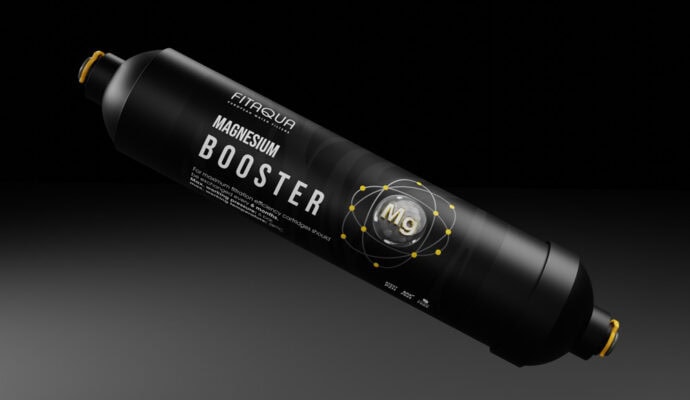
Magnesium Booster – Strength, Energy, Vitality
Discover how Magnesium Booster can revolutionize your daily health habits! This innovative filter cartridge enriches water with magnesium, a key mineral for your body.
-
 Healthy living
Survival: Key Aspects and Water Filtration
How to effectively filter water in the field and what products can help you with this.